
To John Thomas Quekett1 7 September [1848]2
Down Farnborough Kent
Sept 7th
Dear Sir
I am going to beg of you a great favour. Some years ago I took all my collection of Mollusca in Spirits to Mr Sowerby3 & to the best of his recollection & mine the more interesting forms were all sent to Prof. Owen,4 including many Cirripedia. I formerly spoke to Prof. Owen on the subject The collection was originally in square green glass (or white round) bottles. The specimens are tied up in coarse [rags] with a little tin
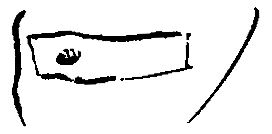 number to each, by which they could easily be recognised. If you would endeavour to find any such bottle, it would be a very great kindness to me, for it is most mortifying to me to have lost my own Cirripedia, now that I am at work on them.— I hope to be in London in October5 & will then call at the College & look over all your Cirripedia, which you said you would be so good as to look out for me.
I do not know whether you would care for some specimens, but I could give you the larva in the first stage of Scalpellum, in which with my best power I cannot see any striæ in the muscles of the legs.—6
Pray believe me dear Sir | Yours very faithfully | C. Darwin
In the second larval condition, the striæ are most plain.—
Footnotes
Bibliography
Correspondence: The correspondence of Charles Darwin. Edited by Frederick Burkhardt et al. 29 vols to date. Cambridge: Cambridge University Press. 1985–.
Journal of researches 2d ed.: Journal of researches into the natural history and geology of the countries visited during the voyage of HMS Beagle round the world, under the command of Capt. FitzRoy RN. 2d edition, corrected, with additions. By Charles Darwin. London: John Murray. 1845.
Schmidt, Carl. 1852. Contributions to the comparative physiology of the invertebrate animals, being a physiologicochemical investigation. [Translated from Annalen der Chemie und Pharmacie 54 (1845).] Scientific Memoirs, selected from the transactions of foreign academies of science and learned societies 5: 1–43.
South America: Geological observations on South America. Being the third part of the geology of the voyage of the Beagle, under the command of Capt. FitzRoy RN, during the years 1832 to 1836. By Charles Darwin. London: Smith, Elder & Co. 1846.
Summary
Asks about collection of mollusc specimens he had lent to Richard Owen.
Asks about seeing cirripede collection of the College.
Comments on larva of Scalpellum.
Letter details
- Letter no.
- DCP-LETT-1114
- From
- Charles Robert Darwin
- To
- John Thomas Quekett; Royal College of Surgeons of England
- Sent from
- Down
- Source of text
- American Philosophical Society (Mss.B.D25.62)
- Physical description
- ALS 4pp
Please cite as
Darwin Correspondence Project, “Letter no. 1114,” accessed on
Also published in The Correspondence of Charles Darwin, vol. 4