Darwin exchanged letters with nearly 2000 people during his lifetime. These range from well known naturalists, thinkers, and public figures, to men and women who would be unknown today were it not for the letters they exchanged with Darwin.
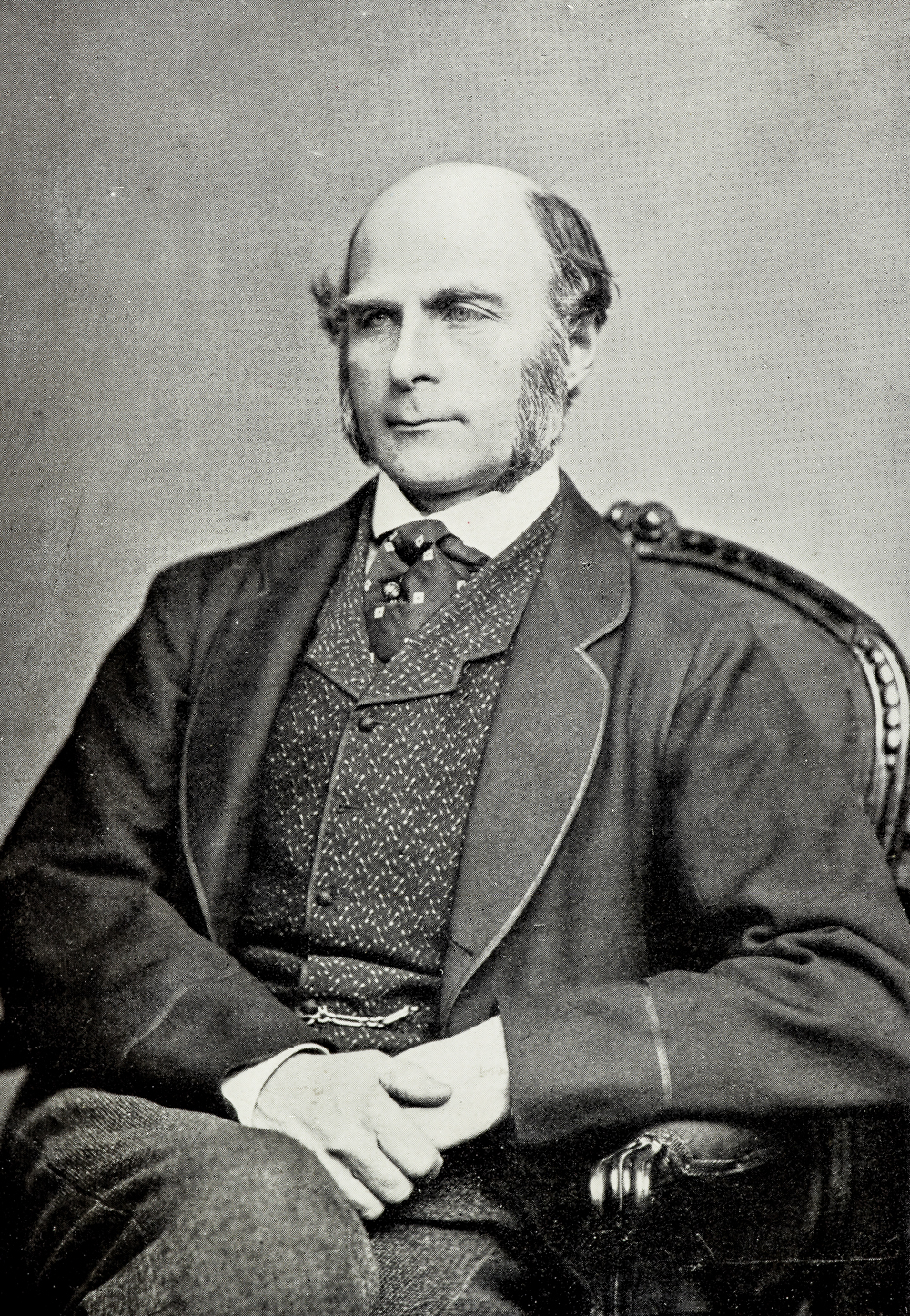
Francis Galton from the frontispiece of Pearson, Karl. 1914-30. The life, letters and labours of Francis Galton. Cambridge: Cambridge University Press.
Galton was a naturalist, statistician, and evolutionary theorist. He was a second cousin of Darwin's, having descended from his grandfather, Erasmus. Born in Birmingham in 1822, Galton studied medicine at King's College, London, and also read mathematics at Trinity College, Cambridge. On inheriting a large fortune from his father, he abandoned medicine, which he disliked, indulged in travel and sport, and then financed his own expedition to southwest Africa (1850-52), completing a natural historical narrative of the journey (Galton 1853).
Dubbed "Darwin's bulldog" for his combative role in controversies over evolution, Huxley was a leading Victorian zoologist, science popularizer, and education reformer. He was born in Ealing, a small village west of London, in 1825. With only two years of formal education, he apprenticed in medicine and then entered the navy, serving as assistant surgeon on H.M.S. Rattlesnake in the South Pacific (1846-1851). He pursued natural history alongside his medical duties, concentrating on the anatomy of marine invertebrates.
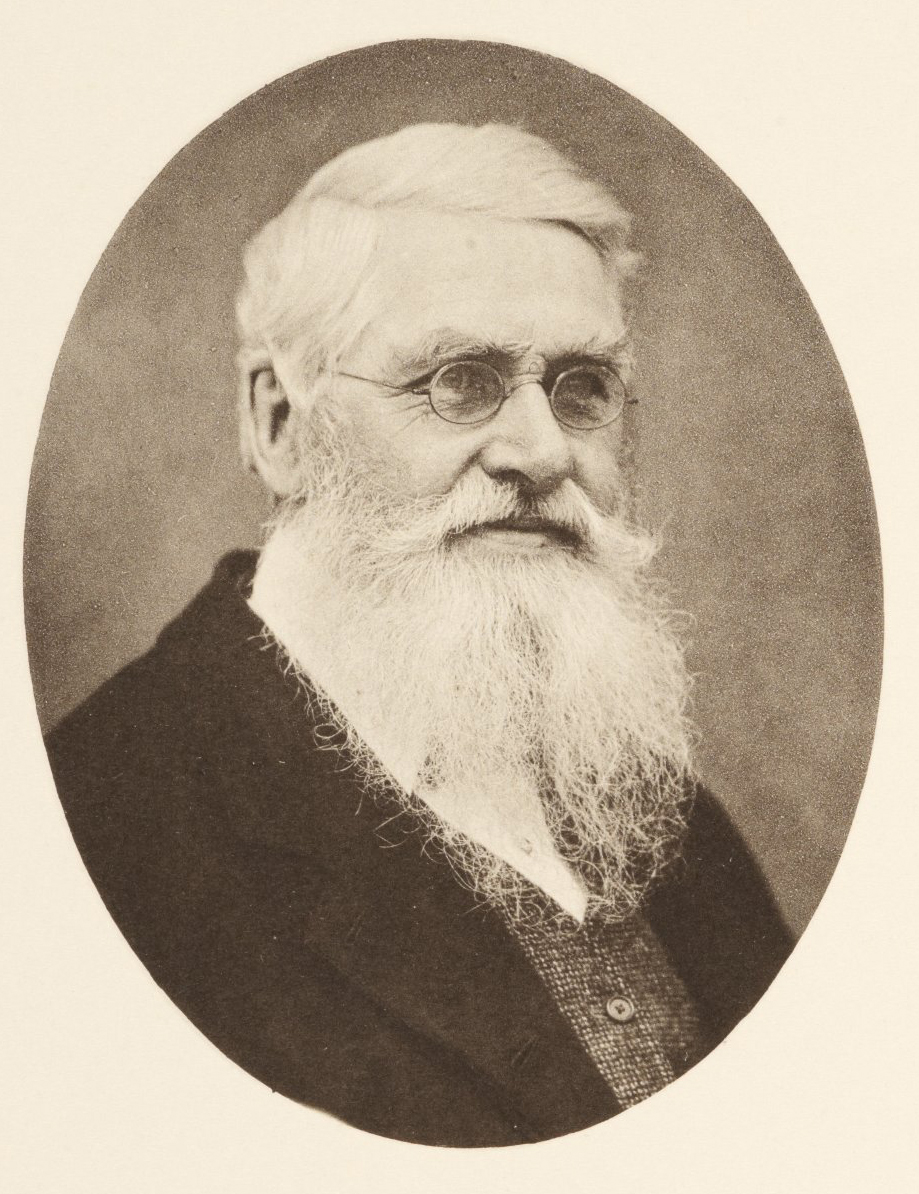
Wallace was a leading Victorian naturalist, with wide-ranging interests from biogeography and evolutionary theory to spiritualism and politics. He was born in 1823 in Usk, a small town in south-east Wales, and attended a grammar school in Hertford. At the age of 13, he was forced to leave school and enter a trade because of financial hardship. He joined an older brother in London as a builder's apprentice, and the following year started work as a land surveyor with another brother, travelling to different parts of England and Wales and collecting plants.
Cobbe was born in Dublin, Ireland, and educated at home, at Newbridge House, county Dublin, except for two years at a school in Brighton: she hated the school. After she left, she kept house for her mother and father, and after her mother's death for her father alone, for nineteen years, while she energetically educated herself. Cobbe wrote that she inherited from her parents a physical frame which, 'however defective ...from the aesthetic point of view', had been, as regards health and energy, 'a source of endless enjoyment'.
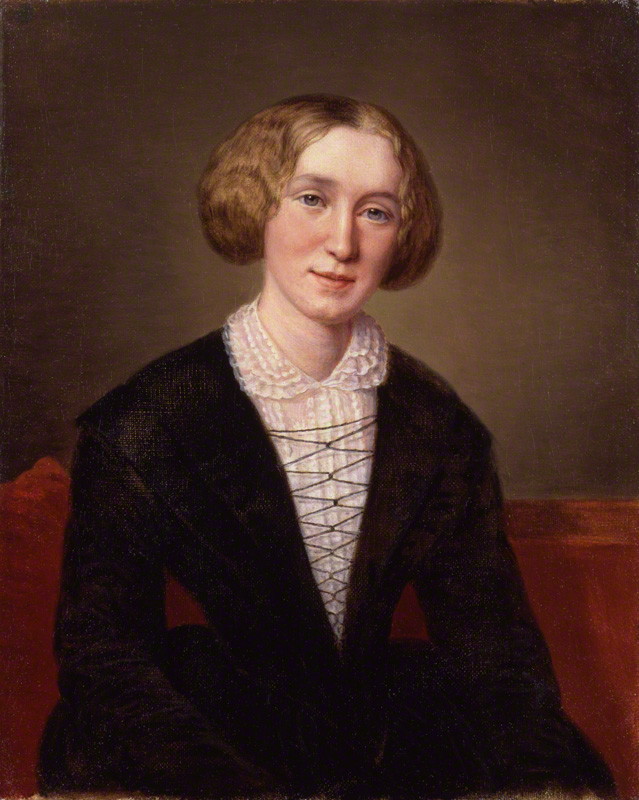
George Eliot was the pen name of celebrated Victorian novelist Mary Ann Evans (1819-1880). She was born on the outskirts of Nuneaton in Warwickshire and was educated at boarding schools from the age of five until she was 16. Her education ended when she was required to come home to nurse her mother and, following her mother's death, to care for her father and to run the family household. In 1841 she moved to Coventry with her father and continued to care for him until he died.
John Lubbock was eight years old when the Darwins moved into the neighbouring property of Down House, Down, Kent; the total of one hundred and seventy surviving letters he went on to exchange with Darwin is a large number considering that the two men lived as close neighbours for most of their lives.
In 1869, when gathering data on sexual selection in humans, Darwin exchanged a short series of letters with John Beddoe, a doctor in Bristol. He was looking for evidence that racial differences that appear to have no benefit in terms of survival - and therefore could not be explained by natural selection - could instead have been acquired through choices in sexual partner. Darwin was fascinated by Beddoe's analysis of married and single women patients in Bristol Royal Infirmary by hair colour.
Mary Everest was born in 1832 in Wickwar, Gloucestershire, daughter of Reverend Thomas Everest. Her uncle was George Everest, Surveyor General of India, after whom Mount Everest is named. Her family moved to France seeking to improve her father's ill health through homeopathic cures. She was educated at home and received arithmetic lessons from Monsieur Déplace, whom she idolised as the 'hero' of her childhood. The family returned to England when she was 11 where she assisted in her father's parish, teaching in Sunday school. During a visit to Ireland when she was 18 she met George Boole, a 35 year old professor of mathematics who taught at Queen's College, Cork. They shared both a love of mathematics and an approach to learning that was more practical and engaging than learning by rote. The couple married in 1855 and had 5 daughters but Mary was widowed at 32, when her youngest daughter was six months old.
Elizabeth Garrett was born in Whitechapel, London. She was initially educated at home but at 13 sent to boarding school. She was always interested in politics and current affairs but decided to pursue a career in medicine at a time when women were excluded from formal medical training.
James Crichton-Browne became one of the most distinguished psychiatrists of the late nineteenth-century, but the letters he exchanged with Charles Darwin as the young and overworked superintendent of the largest mental asylum in England, are almost the only personal papers to survive from this stage of his career. They are an extraordinary glimpse not only into Crichton-Browne's research and the development of Darwin's thinking, but into the everyday lives of the patients whose records Crichton-Browne sent on.
Writes about Hensleigh Wedgwood's marriage to Frances Mackintosh and her own engagement to Charles Langton. Also gives news of other relatives and friends.
Writes of his ride from Rio Negro to Bahia Blanca and Buenos Aires, which he undertook in order to learn the geology of the land, so full of bones of large extinct quadrupeds.







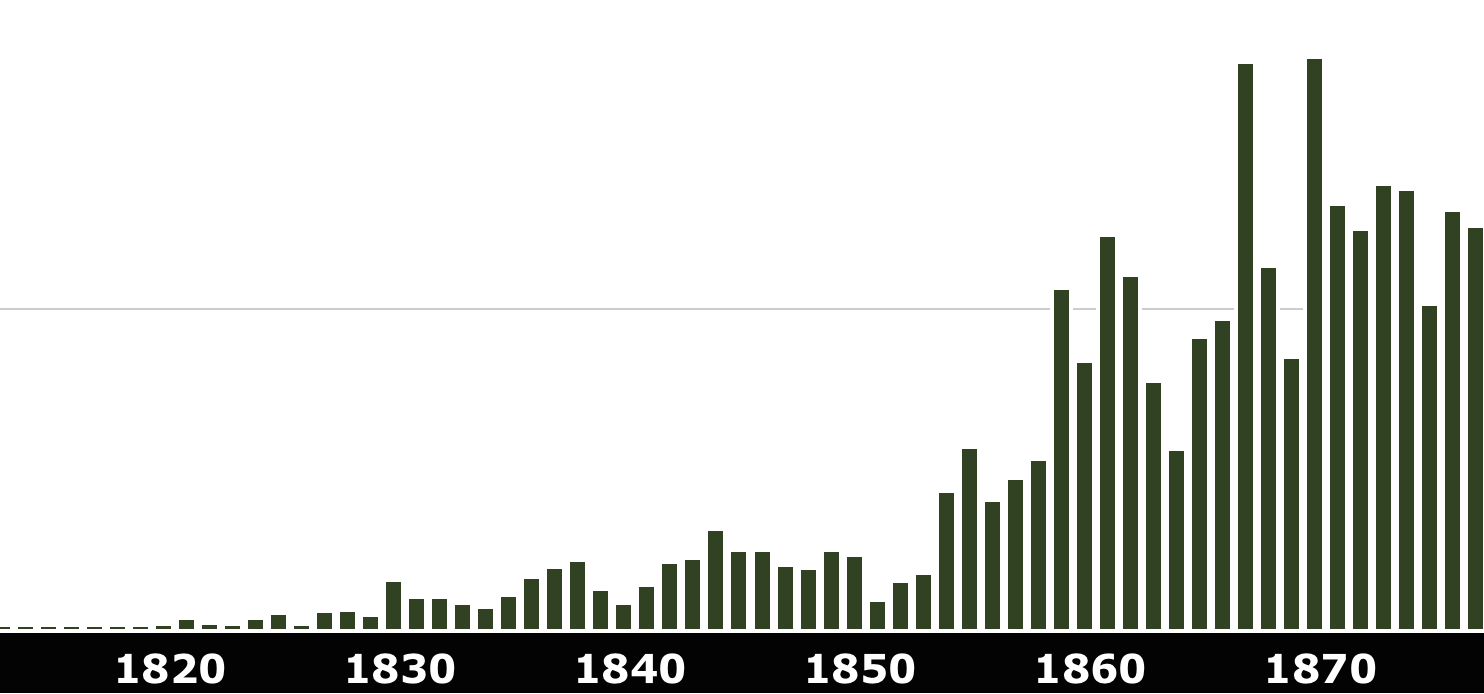
Darwin exchanged letters with nearly 2000 people during his lifetime. These range from well known naturalists, thinkers, and public figures, to men and women who would be unknown today were it not for the letters they exchanged with Darwin.